

How to Fix Recurring Drain Clogs for Good

Table of Contents
Why Your Drains Keep Clogging: A Diagnostic Approach
The Usual Suspects: Hair, Soap Scum, and Grease
When DIY Methods Fail and Why
Step-by-Step: How to Clear a Stubborn Clog
The Best Tools for Clearing Stubborn Drain Clogs
Identify Your Pipe Material First
Tool-by-Tool, With Material Caveats
The Long-Game Tool Most Guides Skip
Matching the Method to the Material
Signs of Main Sewer Line Blockage You Shouldn't Ignore
Vent Stack Blockages: The Root Cause Most Guides Miss
Main Sewer Line Blockage: The Symptoms That Mean Business
Tree Roots: The Hidden Cause of Deep Recurring Clogs
How to Tell the Three Apart
What Happens Next
How Often Should You Clean Your Drains to Prevent Recurring Clogs?
When to Call a Professional for Recurring Drain Clogs
Frequently Asked Questions
Last Updated: September 30, 2026
Why Your Drains Keep Clogging: A Diagnostic Approach
If you're dealing with recurring drain clogs, the clog isn't the problem, the cause is.
The Usual Suspects: Hair, Soap Scum, and Grease
Hair and soap scum are the most common causes of bathroom clogs; grease accumulation does the same in kitchen drains. Together they form a sticky layer inside your pipes that traps everything else.
Hair clogs: Most common in shower and tub drains
Soap scum: Builds up on pipe walls over months
Grease accumulation: The top cause of kitchen sink clogs
Pipe buildup: Combined layer of all three over years
When DIY Methods Fail and Why
Watch Out Chemical drain cleaners can corrode pipes, particularly older metal ones. They also pose a risk to anyone working on the drain later. If a plumber opens that pipe, the chemicals can splash back. Skip the harsh chemicals and use mechanical methods instead.
Recurring clogs often mean the blockage is deeper than you think. If a plunger fails after two or three tries, the problem is further down the line.
Step-by-Step: How to Clear a Stubborn Clog
Here's a common process for clearing stubborn clogs:
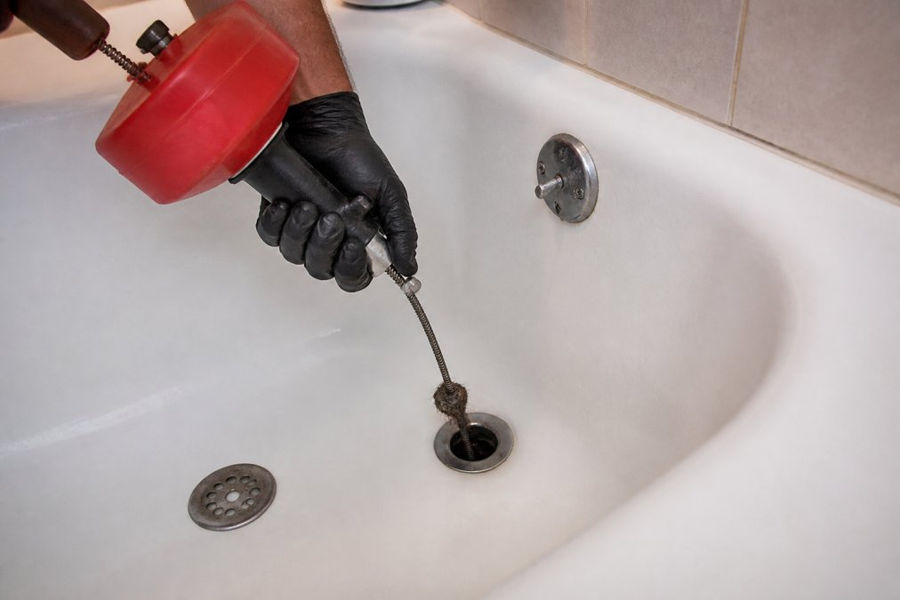
1. Remove the drain stopper. Most bathroom drains have one you can pull out or unscrew for direct access.
The Best Tools for Clearing Stubborn Drain Clogs
The best tool depends less on the clog than on your pipe material. The same snake that clears PVC can scar galvanized steel or crack older cast iron, so identify your pipes first.
This Old House
Identify Your Pipe Material First
Check under a sink or at exposed pipe in a basement or crawlspace. Quick tells:
PVC (white or cream plastic): Smooth, joined with purple primer and cement. Common in homes built or re-piped after the mid-1970s. Tolerant of most mechanical tools.
ABS (black plastic): Same era as PVC, slightly softer. Fine for snakes; avoid aggressive auger tips that can gouge the wall.
Galvanized steel (dull gray, magnetic, threaded joints): Common in homes built before roughly 1960. Internal corrosion creates a rough, narrowed bore that snags hair and soap. Snaking removes the clog but scrapes the compromised wall, and the rough surface re-clogs faster.
Cast iron (dark, heavy, often with a hub-and-spigot joint): Found in pre-1975 homes. The interior scales into a rough, rust-textured surface. A snake can chip the scale loose, but a stiff auger at the wrong angle can crack a brittle section.
Copper (reddish, soldered joints): Rare in drain lines, but if present, treat it gently, thin-wall copper dents easily.
Tool-by-Tool, With Material Caveats
Tool | Best For | Safe On | Avoid On |
Cup plunger | Sinks and tubs | All materials | , |
Toilet plunger (flange) | Toilets | All materials | , |
Hand drain snake (25-50 ft) | Hair and soft debris | PVC, ABS, copper | Cast iron with heavy scale |
Drum auger / power auger | Deeper blockages past the P-trap | PVC, ABS | Galvanized steel, brittle cast iron |
Wet/dry vacuum | Loose debris after breaking up a clog | All materials | , |
Enzyme drain cleaner | Ongoing biological maintenance | All materials | , |
Chemical drain cleaner | Nothing recurring | , | Galvanized, cast iron, older PVC |
A hand snake (drain auger) is the workhorse for recurring bathroom clogs, reaching past the P-trap to pull the obstruction out instead of pushing it down. On galvanized or scaled cast iron, though, it leaves fresh scratches that catch tomorrow's hair, one reason the clog keeps coming back.
Watch Out Skip chemical drain cleaners on any pipe older than about 30 years. On galvanized steel and cast iron, the caustic solution eats into the already-thin wall and accelerates the corrosion that caused the clog in the first place. On any pipe, it leaves a caustic pool sitting in the trap that can splash back on whoever opens it next.
The Long-Game Tool Most Guides Skip
On galvanized or scaled cast iron, mechanical clearing is temporary, the rough interior keeps snagging debris. The realistic options:
Enzyme maintenance. A monthly biological enzyme dose digests the organic film on rough pipe walls. It won't clear an active clog, but it slows the re-clog cycle and is safe for every material above.
Professional descaling or hydro-jetting. High-pressure water scours the interior wall back toward bare metal or plastic, the only method that addresses the rough surface itself, not just the debris on it.
Pipe replacement. For galvanized steel narrowed to a fraction of its original bore, re-piping in PEX or PVC is the only permanent fix. Recurring clogs in a fully galvanized house usually signal end-of-life pipe, not a cleaning problem.
Pro Tip After snaking a drain, flush it with a mix of baking soda and vinegar. Let it sit for 15 minutes, then follow with hot water. This helps clear any remaining debris and deodorizes the drain. On galvanized or cast iron, follow up with a monthly enzyme dose to slow the next buildup.
Matching the Method to the Material
A quick decision path:
PVC or ABS, single fixture, clog returns every few weeks: Hand snake, then monthly enzyme maintenance. If it still returns, the problem is likely downstream, see the vent and main-line sections.
Galvanized steel, any fixture, clog returns: Stop snaking. Get a camera inspection to see how much bore is left. If it's more than half blocked by corrosion, plan for re-piping.
Cast iron, recurring clogs in a pre-1975 home: Camera inspection to check for scale, cracks, and root intrusion at joints. Hydro-jetting can buy years; replacement is the long-term answer.
Any material, multiple fixtures affected at once: The problem is past the fixture drain. Move to the main-line and vent diagnostics.
The tool matters. The pipe it's going into matters more.
Signs of Main Sewer Line Blockage You Shouldn't Ignore
Not every recurring clog lives in the drain line. Two hidden systems cause most clogs that keep coming back no matter how many times you snake: the vent stack on your roof and the main sewer line under your yard. They produce overlapping symptoms, so the first job is telling them apart.
Vent Stack Blockages: The Root Cause Most Guides Miss
Every drain connects to a vent pipe that runs up through the walls and out the roof, letting air into the drain line so wastewater can flow. When the vent is blocked, water tries to drain into a vacuum: it gurgles, it's slow, and it pulls water out of nearby traps, letting sewer gas in and leaving traps dry and prone to clogging.
Gurgling from a fixture you didn't just use. A toilet gurgles when the bathroom sink drains, air pulled through the wrong path.
Slow drains throughout the house that come and go. Vent clogs are often partial, so drainage varies with weather and use.
Sewer smell in one room, not the whole house. A dry trap under a rarely-used fixture is the usual cause, and a blocked vent is what dries it out.
Water level in a toilet bowl that drops or bubbles after another fixture drains. Classic vent-stack symptom.
No backup at the lowest fixture. A true main-line blockage backs up at the lowest drain first. A vent blockage often doesn't.
Common causes of a blocked vent:
Bird or rodent nests built in the open pipe on the roof
Leaves and debris packed into the vent opening
Frost or ice closing the top in cold weather
A dead animal that fell in
A sagging vent line that collects condensation and debris
Watch Out Never pour chemical drain cleaner down a drain you suspect has a vent problem. The chemical sits in the trap, and the blocked vent keeps it from flushing through. It also won't touch the actual blockage, which is on the roof.
Main Sewer Line Blockage: The Symptoms That Mean Business
A main-line blockage is different: it backs up at the lowest point in the house first, and it gets worse fast.
Watch for these warning signs:
Multiple drains backing up at once. If the toilet, sink, and tub all have issues, the main line is blocked.
Sewage backing up in the lowest fixture. Usually a basement floor drain, a laundry sink, or a first-floor tub.
Sewage smell throughout the house. Wastewater isn't draining, and gas is finding its way up.
Water pooling around floor drains. A sign of sewer backup.
Gurgling from every drain, not just one. Air is trapped because water can't flow anywhere.
Slow drainage at every fixture, all the time. Not intermittent, constant.
Tree Roots: The Hidden Cause of Deep Recurring Clogs
If your home was built before roughly 1980 and has mature trees near the sewer lateral, roots are a leading suspect for clogs that return every few months. Roots find hairline cracks and joint gaps in clay tile, cast iron, or older PVC, then grow into the pipe seeking water and nutrients. They form a mesh that catches everything, paper, grease, hair, and no plunger or hand snake will clear it for long.
Signs roots are the culprit:
Clogs return on a seasonal rhythm, often in spring and fall when roots grow
The same drain clogs every few months despite regular snaking
A snake comes back with root fragments or a gritty, earthy smell
You have mature trees, especially willows, maples, oaks, or sycamores, within about 30 feet of the sewer line
How to Tell the Three Apart
Symptom | Vent Stack | Main Line | Tree Roots |
Gurgling at fixtures you're not using | Yes | Sometimes | Sometimes |
Backup at lowest fixture first | No | Yes | Yes |
Sewer smell in one room | Yes | No | No |
Sewer smell throughout house | No | Yes | Yes |
Clogs return on a seasonal cycle | No | No | Yes |
All fixtures slow at once | Sometimes | Yes | Yes |
What Happens Next
A video camera inspection is the best way to confirm any of these. It lets a plumber see inside your pipes without digging, and it produces a recording you can keep for a second opinion or an insurance claim.
Vent blockage: Clear the obstruction from the roof, or have a plumber run a vent auger down from the top. This is often a same-day fix and resolves the gurgling and smell immediately.
Main-line blockage without roots: Hydro-jetting scours the full pipe wall, not just the clog. Snaking opens a hole; hydro-jetting cleans the whole bore.
Tree root intrusion: Hydro-jetting cuts the roots back, but they grow again. Long-term options are a root-killing treatment, pipe lining (a resin sleeve cured in place), or full replacement of the affected section.
Belly or offset joint: These catch debris permanently. Lining or spot repair is usually the answer.
Key Takeaway If a clog keeps coming back, stop treating the drain. Get a camera inspection. It's the only way to know whether you're dealing with a vent, a main line, or roots, and each one needs a completely different fix.
How Often Should You Clean Your Drains to Prevent Recurring Clogs?
Clean your drains every one to three months to prevent recurring clogs. Homes with older pipes or heavy use may need more frequent maintenance.
Preventative care makes a real difference. A simple schedule:
Monthly: Pour hot water down kitchen drains to melt grease
Every 2-3 months: Use a drain snake on bathroom drains
Seasonally: Check for slow drainage in all fixtures
Annually: Consider a professional plumbing inspection
When to Call a Professional for Recurring Drain Clogs
Call a professional when DIY methods fail repeatedly or you suspect a main sewer line issue. Recurring clogs often signal a structural problem that needs professional tools.
Here's when to stop DIY and make the call:
You've cleared the same drain three or more times this year
Multiple fixtures are affected at once
You notice sewage odors or water backing up
Chemical cleaners and snaking haven't worked
You suspect tree root intrusion or pipe corrosion
Frequently Asked Questions
What causes frequent drain clogs in residential plumbing?
Frequent drain clogs often stem from gradual buildup of hair, soap scum, and grease. These substances coat pipe walls and narrow the passage over time. In older homes, pipe corrosion or a sagging P-trap can also trap debris. If clogs return within weeks, a deeper issue like root intrusion or a vent stack blockage may be the cause. A video camera inspection can identify the exact problem.
How often should you clean your drains to prevent recurring clogs?
For most households, a preventive drain cleaning every 3 to 6 months helps avoid recurring clogs. If you have multiple occupants or long hair, aim for every 3 months. Commercial kitchens with heavy grease output may need monthly service. Using enzyme cleaners monthly between professional cleanings can also slow buildup. Mark your calendar and stick to a schedule.
Does pouring salt or vinegar down a drain actually prevent clogs?
Salt and vinegar can loosen light grease or odor-causing film, but they do not remove solid blockages or root intrusions. For recurring clogs, these DIY mixes offer only temporary relief. A drain snake or hydro-jetting is more effective for stubborn debris. If you rely on salt or vinegar repeatedly, it is a sign the clog is deeper than a surface fix.
When should you call a professional for recurring drain issues?
Call a professional if you have tried plunging, snaking, or chemical cleaners and the clog returns within days. Other signs include multiple slow drains, sewage odors, or gurgling sounds. These point to a main sewer line blockage or vent stack issue. A licensed plumber can perform a video camera inspection and recommend hydro-jetting or repair.
Get In Touch


Comments